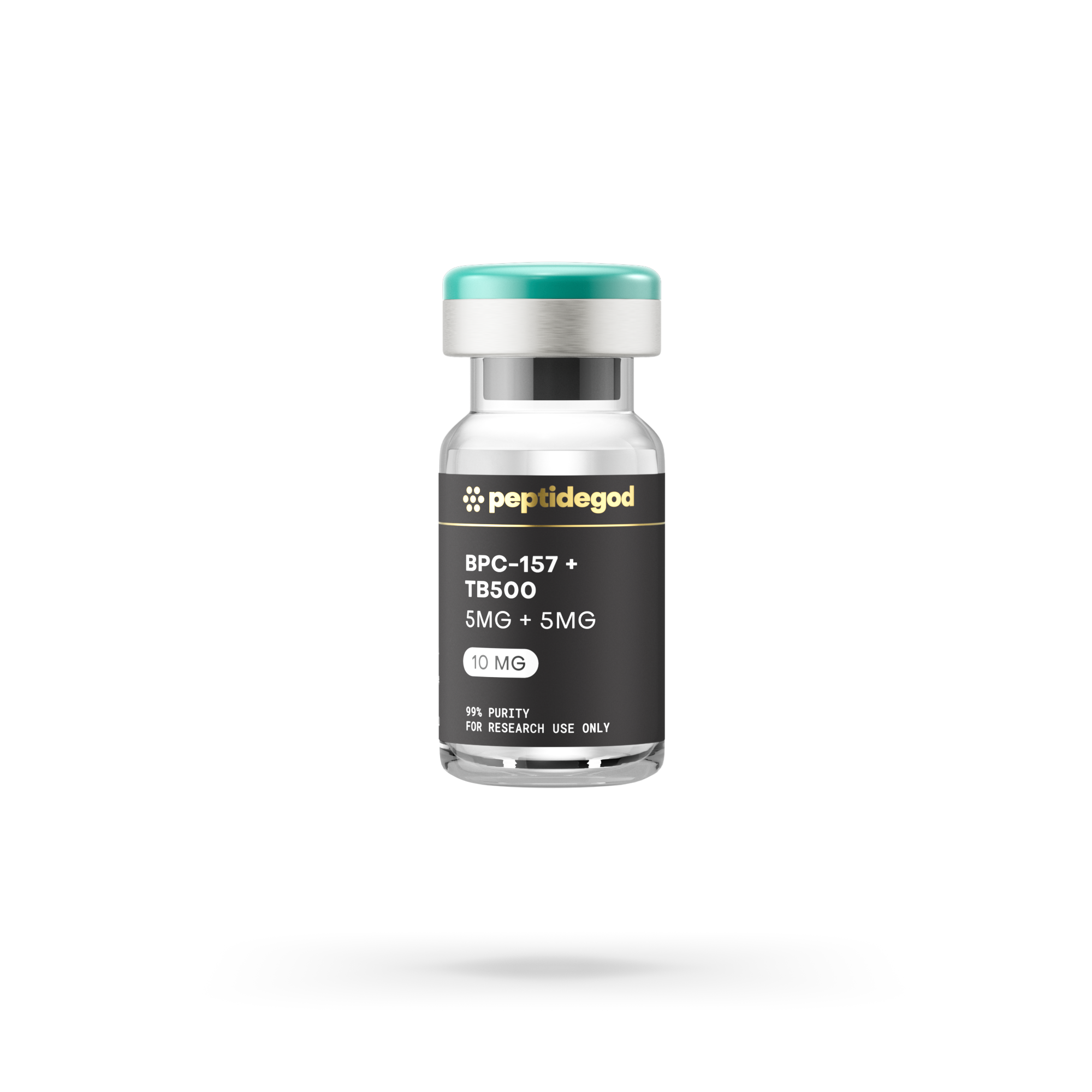
BPC-157 lyophilized vial from Peptide God, priced at $34.95.
PeptideGod BPC-157 + TB500 Blend Review
PeptideGod BPC-157 + TB500 pre-mixed blend reviewed. Convenience vs flexibility, pricing compared to separate vials and our editorial verdict.
Key Features
- $59.95
- price per blend vial
- $10 savings
- vs buying BPC-157 + TB-500 separately
- 2 peptides
- BPC-157 (15aa) + TB-500 (43aa) in one vial
- US shipping
- insulated packaging from domestic warehouse
What's Inside
The blend vial contains lyophilized BPC-157 and TB-500 in a pre-determined ratio. BPC-157 (molecular weight 1419.5 g/mol) is a 15-amino-acid tissue repair peptide. TB-500 is a 43-amino-acid fragment of Thymosin Beta-4 that promotes cell migration. The two compounds target different mechanisms, BPC-157 acts through growth factor upregulation and nitric oxide pathways, while TB-500 acts through G-actin sequestration and actin polymerization.
PeptideGod's product page does not show a Certificate of Analysis for the combination. The actual amount of BPC-157 against TB-500 in the mixture needs to be checked on the seller's website. Mix with bacteriostatic water according to instructions on our reconstitution guide.
How to Store and Handle
The conditions of storage are the same as those of the other lyophilized peptides: store in a freezer at -20°C when the vial is sealed and at 2-8°C (in a refrigerator) after reconstitution, consume the product within 28 days. Protect from light. The reconstitution of the mixture is identical to that of the individual peptide vials: add bacteriostatic water to the vials without shaking; slowly direct the water toward the wall of the vial and swirl it carefully.
PeptideGod BPC-157 + TB500 Overview
PeptideGod's BPC-157 + TB-500 Blend is a pre-mixed lyophilized vial containing both peptides in a single product. At $59.95, it is priced below the $69.95 cost of buying separate BPC-157 ($34.95) and TB-500 ($35.00) vials individually. The blend is the most popular product combination in the recovery peptide category, based on the rationale that these two peptides target complementary tissue repair mechanisms.
Our Verdict
The BPC-157 + TB-500 blend is the value option for researchers who want both compounds. The $10 savings over separate vials and the convenience of single-vial reconstitution make it appealing. The trade-off is dose inflexibility: you cannot adjust the amount of BPC-157 independently of TB-500 within a blend vial. If your protocol calls for different ratios on different days or wants to test each compound individually, separate vials are necessary.
The reasoning behind the combination is sound from a mechanistic point of view, that is, there are different but complementary pathways of tissue healing, but there is no study that has been published in the literature that compares this particular pairing with either of the peptides alone in an experimental setup. The lack of available COA represents the same drawback seen in other PeptideGod products.
Our rating
BPC-157 lyophilized vial from Peptide God, priced at $34.95.
FAQ, BPC-157 + TB500 Blend
What is the ratio of BPC-157 to TB500 in the blend?
Please refer to the PeptideGod product page for the precise ratio as it is subject to change in case of batches or product upgrades. The advantage of pre-blended vials is that they maintain the ratio of peptides and you are not given the opportunity to change the relative dosages of peptides in a dose.
Is the blend cheaper than buying two separate vials?
The combined price is $59.95 while the cost of buying BPC-157 ($34.95) and TB-500 ($35.00) vials separately comes up to $69.95. This implies that people could save about $10 when buying the two vials together.
Does PeptideGod publish a COA for the blend?
No. At the time of this review, PeptideGod has not provided a Certificate of Analysis on the blend. Real Peptides does not possess a BPC-157 + TB-500 blend, so there is no COA-backed option for this exact combination in this library.
Can you adjust the dose of each peptide in a blend?
No, in the case of a pre-mixed vial, each dose drawn has both peptides in the same ratio. If independent dosing is required, for instance, more BPC-157 and less TB-500, multiple vials would need to be used.