NA Semax Amidate
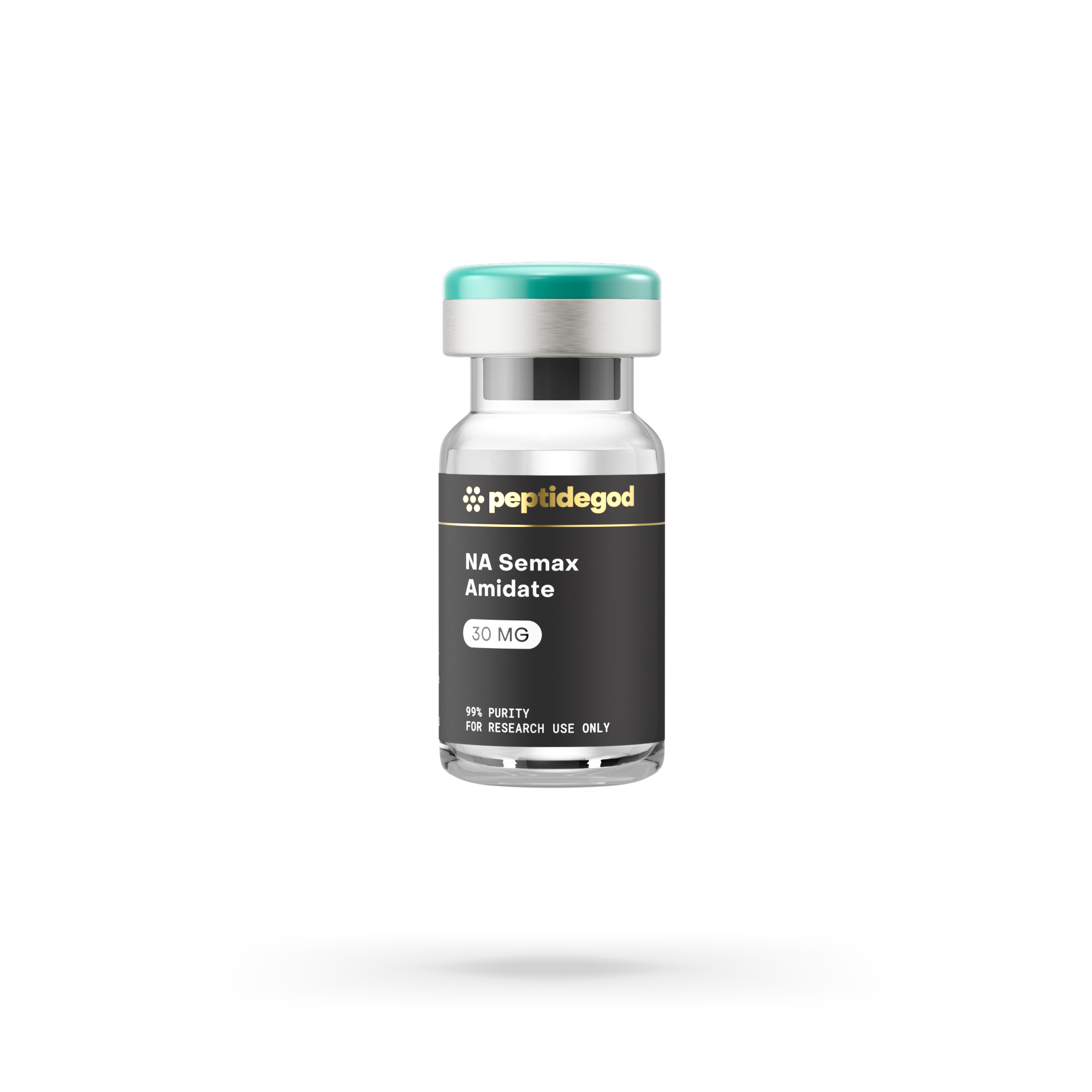
NA Semax Amidate (modified Semax) nasal peptide from Peptide God at $49.95.
Cognitive peptides Semax and Selank compared by published research. Mechanism data, study outcomes, nasal administration and vendor options reviewed.

NA Semax Amidate (modified Semax) nasal peptide from Peptide God at $49.95.
We look for a batch-level certificate of analysis published by the merchant.
Purity percentage and milligrams per vial as stated on the product page.
Clear research-use labeling, lot numbers and storage instructions.
Vials compared on price per milligram, not on sticker price.

NA Semax Amidate (modified Semax) nasal peptide from Peptide God at $49.95.

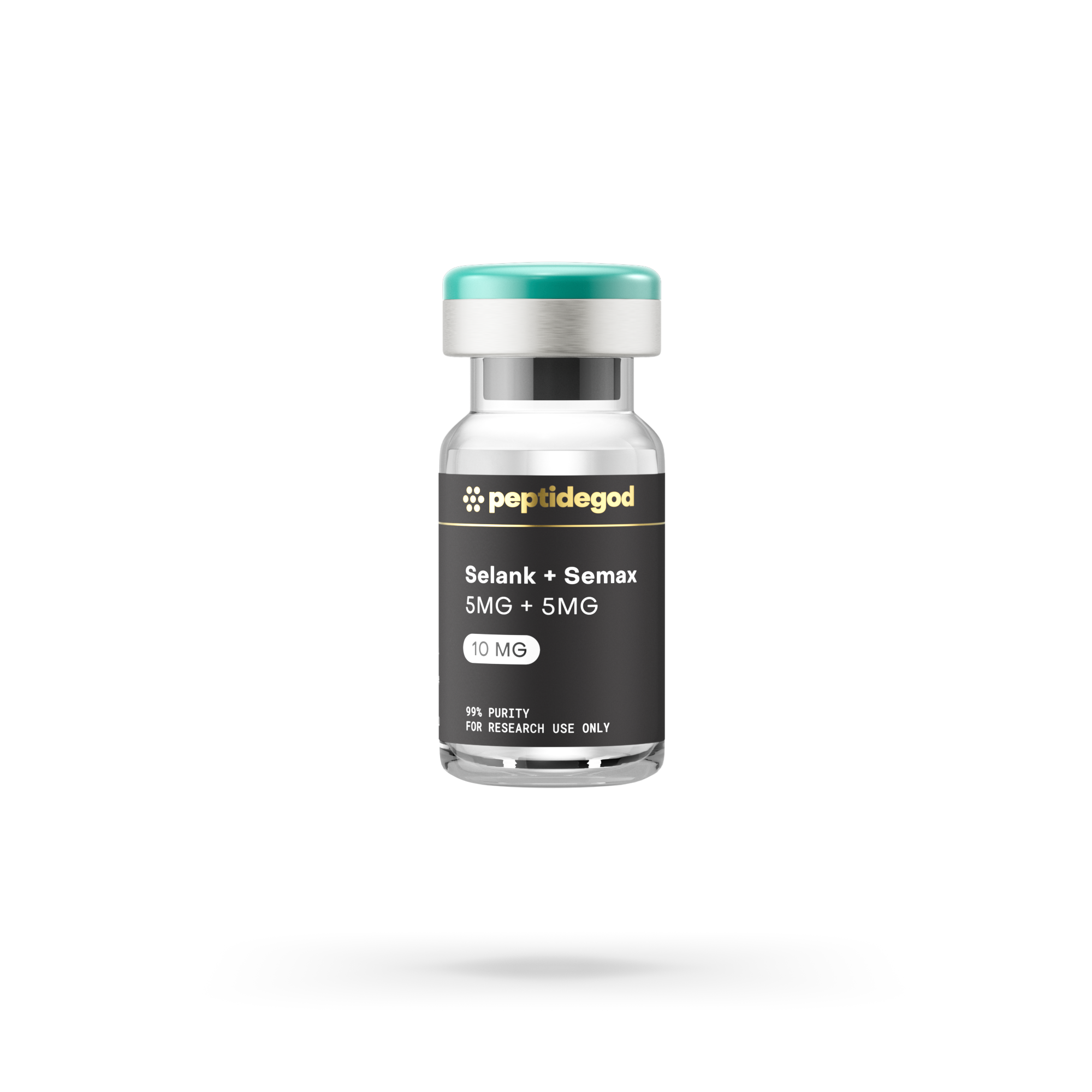
Combined Selank and Semax nasal peptide from Peptide God at $59.95.
| Product | Price | Brand | Type | Route | Price |
|---|---|---|---|---|---|
| Peptide God NA Semax Amidate | $49.95 | Peptide God | Nootropic peptide | Nasal | $49.95 |
| Peptide God Selank + Semax | $59.95 | Peptide God | - | Nasal | $59.95 |
The area of cognitive peptides corresponds to the intersection between neuroscience and nootropic research. Semax and Selank are the two most studied cognitive peptides, both of which originated from Russia and have been approved for clinical use. This article will discuss published research related to cognitive peptides and in what ways the two different compounds are alike and different.
Cognitive peptides, in regard to this directory, refers to substances being investigated for their capacity in producing cognitive effects in relation to enhancing cognitive operations or neuroprotective processes. So the term excludes the most frequently used nootropic products including such substances as racetams, choline-based products and all adaptogens that are not closely associated with studies of cognitive peptides. Semax and Selank are the only research substances referred to as peptides with cognitive effects significantly examined in the scientific literature.
Semax and Selank were invented at the Institute of Molecular Genetics of the Russian Academy of Sciences. In Russia, Semax has been approved since the 1990s for the treatment of stroke, cognitive dysfunction, and eye diseases. Selank is approved as an anxiolytic agent by Russian authorities. In Russia, there is a lot of clinical data available as a result of its utilization there, which gives us the sufficient amount of information on human safety and efficacy that is absent for many research peptides, although most of the data is published in Russian.
Semax is an artificial version of ACTH(4-10), a part of adrenocorticotropic hormone. The hypothesized mechanism of action implies the increase in the concentration of brain-derived neurotrophic factor (BDNF) that is responsible for the survival and growth of neurons as well as synaptic plasticity. Research indicates that Semax stimulates BDNF expression in the hippocampus and cortex of rats. It has been established that the low levels of BDNF are connected with depression, loss of cognitive abilities and neurodegenerative diseases.
Russian clinical studies on Semax report improvements in attention, memory and cognitive processing speed in stroke patients and individuals with cognitive impairment. A 2010 study in the Journal of Molecular Neuroscience examined Semax effects on BDNF and NGF expression in the rat brain. The clinical doses used in Russian practice are 200-600 mcg per day administered as a nasal spray, divided into 2-3 doses. These studies have generally small sample sizes and are not replicated in Western clinical settings.
NA-Semax-Amidate is an advanced variant of Semax, which has an amide and an N-acetyl modification at the C-terminal end. These modifications intend to offer stability and efficacy by providing the peptide protection from breakdown by enzymes located in the nasal mucosa. PeptideGod markets NA-Semax-Amidate instead of the original form. There are fewer publications concerning NA-Amidate specific information compared to Semax, but the activities of the peptide are assumed to be similar.
With Selank, the synthetic version of Tuftsin, one obtains an immunostimulatory agent that has features of an anxiolytic compound. Selank builds on Tuftsin in terms of its amino acid composition and demonstrates immunomodulatory and anxiety-relieving properties. The anxiolytic effect seems to involve changes in GABA and serotonin transmission. Animal experiments have shown a decrease in anxiety-like behavior measured through the elevated plus-maze and forced swimming tests with no sedative effect observed.
The clinical data in Russia has mentioned anti-anxiety activity of Selank in individuals with generalized anxiety disorder, with the drug acting for several days after nasal intake. Selank was also studied for immune effects – modulation of interleukin expression and activity of immune cells. A 2006 study in Pharmacological Reports examined the anxiolytic effects of Selank in animal models. The combination of anti-anxiety and anti-immune activity makes Selank interesting to study.
Semax is thought to promote the quantity and/or activity of BDNF in the brain, leading to improvements in cognitive function. Selank is supposed to promote relaxation through the pathways of GABA. The application of both peptides is of interest for researchers looking into ways of facilitating cognitive performance while reducing anxiety. Researchers working in this area can use Semax and Selank in combination, courtesy of PeptideGod offering ready-to-mix Semax + Selank nasal spray as well as the separate NA-Semax-Amidate medication. Nevertheless, there have been no studies empirically investigating the combined use of both peptides in a controlled way, although the established mechanisms justify their combined use.
| Product | Amino Acids | Route | Mechanism | Price | COA |
|---|---|---|---|---|---|
| NA-Semax-Amidate (PeptideGod) | 7 (modified) | Nasal spray | BDNF upregulation | $49.95 | Not displayed |
| Selank + Semax Blend (PeptideGod) | 7 + 7 | Nasal spray | BDNF + GABA modulation | $59.95 | Not displayed |
A large part of clinical studies of Semax and Selank is published in journals in the Russian language. Some studies are listed in PubMed, with English abstracts, but the full text is often not available in English. This leads to the verification problem for the Western researchers: the studies do exist, but they are difficult to evaluate properly.
Human studies undertaken with Semax and Selank have typically involved small sample sizes, resulting in studies that use a few dozen (typically 20-50) participants. In terms of modern clinical trials, the large sample sizes of this kind wouldn’t suffice to warrant high statistical power and enable the detection of rare adverse effects of the practices. So the studies provide only preliminary evidence as they wouldn't meet the standards of large multi-centered randomized controlled trials needed for FDA certification.
Semax has received official recognition for clinical use in Russia for the treatment of strokes, cognitive impairment and optic atrophy. There is no approval for Semax from FDA or EMA (European Medicines Agency) as well. In America, Semax is available under the status of a research chemical only.
The method of administration for both Semax and Selank is through a nasal spray system. The very nature of the nasal mucosa allows both Semax and Selank to penetrate the bloodstream and, in the process, avoid the difficulty of passing through the blood-brain barrier by means of the olfactory pathways. As per the established protocols of prescribing in Russia, Semax is prescribed in the range of 200-600 mcg daily in the form of 2-3 doses while Selank is also given in more or less the same amount and manner.
NA-Semax-Amidate is a modified version of the original Semax peptide that contains an N-acetyl moiety and a C-terminal amide. This modification prevents the peptide from being broken down by enzymes, thereby allowing for a prolonged action and better absorption in the nasal cavity. Most of the studies available in the literature have been conducted using Semax, while very little scientific data have been published regarding the variant NA-Amidate; it is, however, the substance sold by PeptideGod.
The research conducted on Semax and Selank was negative in that it failed to reveal any information about development of dependence, withdrawal, or addiction regarding either of these drugs. On the other hand, Selank's anxiolytic mechanism differs from that of benzodiazepines, which are associated with addiction risk. However, despite the lack of long-term studies on the subjects in non-Russian clinics, the preliminary data is not sufficient to draw any conclusions about the dependability of either of them.

Prices, sizes and ratings side by side, updated when the merchant pages change.
Shop peptides