Injectable Peptides: Reconstitution, Routes and Research Data
Injectable peptides explained. Subcutaneous vs intramuscular routes, reconstitution steps, storage requirements and what research protocols report.
The majority of research peptides are packaged as freeze-dried powder in ampoule. When used in research, they should be dissolved in sterile liquid. This manual includes all recent studies carried out on injectable peptide application, instructions on peptide resolution, preservation conditions, and safety notes.
Why Most Research Peptides Are Injectable
Bioavailability Compared to Oral
Peptides consist of amino acid sequences that are bonded together by peptide bonds. The digestive enzymes can easily break down these types of bonds. Peptides that are ingested are first degraded by gastric acid and proteolytic enzymes before they enter systemic circulation. The processes of subcutaneous and intramuscular injection circumvents the digestive tract and deliver peptide directly into the tissue and so into the bloodstream upon absorption. According to published pharmacokinetic reviews, the estimated bioavailability for subcutaneously administered peptides ranges very nearly at 100% while oral bioavailability for non-modified peptides is usually below 5%.
Subcutaneous vs Intramuscular in Study Designs
Subcutaneous (SC) injection is a type of administration in which the peptide is placed in the adipose tissue below the skin. On the other hand, the intramuscular (IM) injection is done deeper, within the muscles. Most studies conducted with peptides on animal testing use either SC or intraperitoneal (IP) method of injection. The SC injection has also been the most commonly used method in humans when clinical trials have been carried out.
Reconstitution Step by Step
Step 1, Gather Supplies
Reconstitution consists of lyophilized peptide vials, vials of bacteriostatic water (BAC water), alcohol swabs, a sterile syringe (usually 1 mL) and a needle (mostly 18-21 gauge for drawing BAC water and a separate 27-31 gauge for injecting in research protocols). All surfaces and vial stoppers need to be cleaned with an alcohol swab before piercing.
Step 2, Add Bacteriostatic Water
Using a syringe, draw up the appropriate quantity of bacteriostatic water. Insert the needle at an angle through the rubber seal of the peptide vial, allowing the water to flow gently along the inner wall of the vial. It’s important that you do not spray the water on the powdered lyophilized peptide - doing this will destroy the structure of the peptide and create foam.
Step 3, Swirl, Never Shake
After adding water to the vial, gently shake or roll it in your fingers until all the powder has been completely dissolved. The solution should be clear indicating that no particulates are present in the liquid. Shaking may form air bubbles in the suspension and lead to the degradation of some peptides because of mechanical stress. If the powder remains undissolved even after two minutes of gentle swirling, the vial may have been exposed to excess heat or light.
Step 4, Calculate Concentration
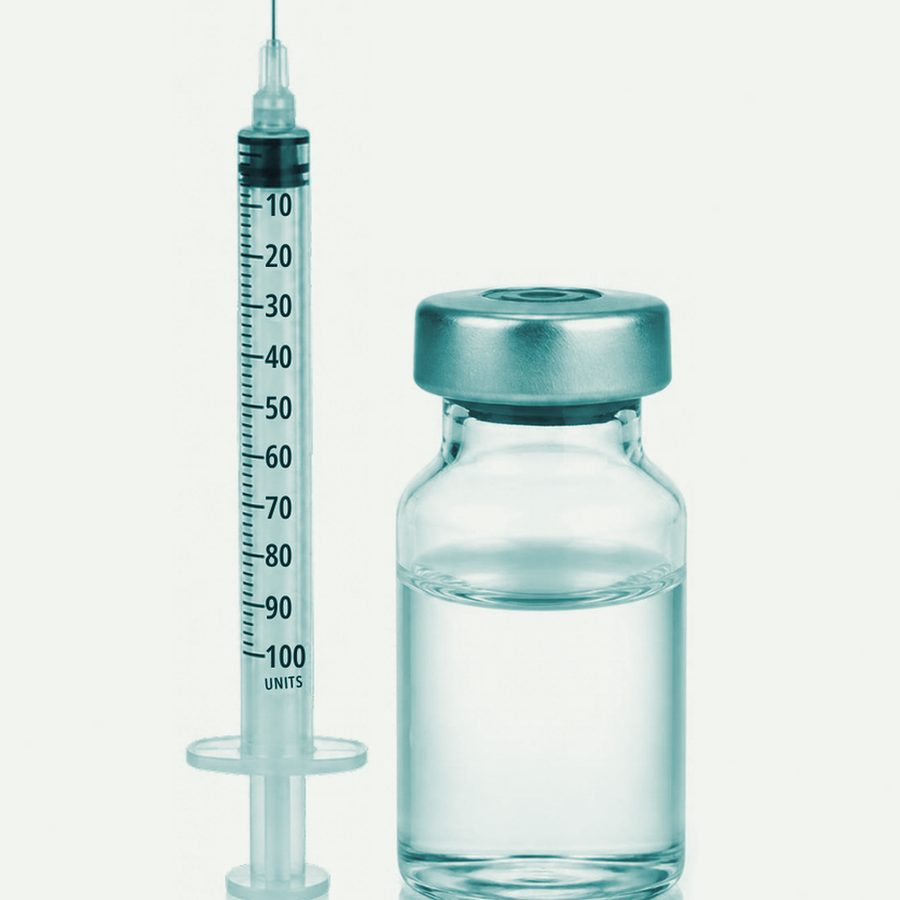
Concentration of a solution once it has been reconstituted is determined by two parameters- the quantity of peptide inside the vial (mg) and quantity of water used to dilute (ml). For instance, adding 2 ml of BAC water to a vial having 10 mg peptide gives a concentration of 5 mg/ml, which implies that each 0.1 ml (10 units on insulin syringe) contains 0.5 mg of peptide. Our reconstitution calculator carries out this calculation automatically.
Storage After Reconstitution
Temperature Requirements
Unreconstituted lyophilized peptides should be stored at -20°C (standard freezer) for long-term stability. Once reconstituted, the solution must be refrigerated at 2-8°C (standard refrigerator). Freezing a reconstituted peptide solution is generally not recommended since the freeze-thaw cycle can degrade the peptide; Also, bacteriostatic water relies on the benzyl alcohol preservative remaining in liquid form.
How Long a Reconstituted Vial Lasts
According to most peptide manufacturers and compounding companies, peptide products should be used within 28 days after reconstitution provided that the product is kept in a temperature range of 2-8°C. However, regardless of the indications given by some stability studies and the potential of certain peptide being stable for longer periods of time, the general standard of the industry remains 28-day use.
- -20°C
- long-term storage for lyophilized peptides
- 2-8°C
- refrigerator storage for reconstituted vials
- 28 days
- standard use window after reconstitution
Common Peptides Studied via Injection
| Peptide | Typical Vial Size | Route in Studies | Storage Notes |
|---|---|---|---|
| BPC-157 | 5 mg / 10 mg | SC, IP (rats) | Stable lyophilized; 28d reconstituted |
| TB-500 | 5 mg / 10 mg | SC, IP (rats) | Standard cold chain |
| Ipamorelin | 5 mg | SC (human Phase II) | Standard cold chain |
| MOTS-c | 5 mg / 10 mg | SC, IP (mice) | Light-sensitive; wrap in foil |
Safety Observations in Published Research
Injection Site Reactions in Animal Studies
Published animal studies on BPC-157 and TB-500 report minimal injection site reactions at standard research doses. A 2018 review in Current Pharmaceutical Design noted that BPC-157 showed no observed toxicity in any published study at doses up to 100 times the proposed effective dose. However, this safety data comes exclusively from animal models and cannot be assumed to apply to human use.
Contamination Risks and Sterile Technique
The main safety issue regarding injectable peptides is not the peptide but the process of reconstitution and injection. The use of non-sterile technique, including reusing syringes or needles, failing to wipe off vial stoppers or using unfinished water, allows for bacteria to enter the solution. Bacteriostatic water contains 0.9% benzyl alcohol used as a preservative and preventing microbes from growing, but it does not make the contaminated solution sterile. Proper aseptic procedure is crucial in any injectable research protocol.
FAQ, Injectable Peptides
Do research peptides need to be refrigerated?
Lyophilized (unreconstituted) peptides are most stable in a freezer at -20°C. Once reconstituted, they must be refrigerated at 2-8°C and used within 28 days. Leaving peptides at room temperature accelerates degradation.
What gauge needle is used in peptide studies?
Instructions provided in available literature as well as in compounding pharmacy procedures suggest using needles of 27-31 gauge for subcutaneous peptide administration. The process requires the use of a larger gauge needle (18-21 gauge) to draw the bacteriostatic water from the container, to be followed by changing to a finer needle. For subcutaneous peptide injection, small-volume marking insulin needles (29-31 gauge) are commonly preferred because of their brevity.
How long does a reconstituted peptide vial last?
The industry standard is 28 days when refrigerated at 2-8°C. After this period, both potency and sterility may decline. Some users report using vials beyond 28 days, but no published stability data supports extending the window for most research peptides.
What is bacteriostatic water?
Bacteriostatic water includes 0.9% of the substance benzyl alcohol, a preservative preventing bacteria from proliferating. Bacteriostatic water is the typical solvent for dissolving lyophilized peptides due to the possibility of making repeated fingerings of the same vial for 28 days. Sterile distilled water for injection purposes doesn't have preservatives and can be used only once in the form of a single injection.
Compare the current picks
Prices, sizes and ratings side by side, updated when the merchant pages change.
Shop peptides